
Oath research is the name we use for how Oath Peptides decides what goes on the site. It comes down to three habits: test every batch, label every vial clearly, and write product pages you can check against public records. This post walks through each one, so you know what’s behind a product before you order it.

Oath research step one: test before listing
Every batch that reaches our Gilbert, Arizona warehouse goes to a US lab first. The lab measures purity by HPLC. Our cut-off is 99%. A batch that comes back below that line doesn’t get listed, however popular the compound is.
That rule applies to everything, from best sellers like BPC-157 and TB-500 to the short bioregulators that only a few labs order. You can read the full process on our peptide lab testing page.
What purity testing doesn’t tell you
HPLC is good at measuring how pure a sample is. It isn’t always good at telling you which compound it is. A clear case is AOD9604 and Fragment 176-191. They’re both 16-residue peptides and differ by a single oxygen atom, about 16 g/mol. Purity testing alone can’t separate them. You need mass spectrometry for identity. We say this on both product pages, because it matters if your work depends on which one you have.
Oath research step two: label what’s inside
Every vial is sealed and labeled with the compound name and the amount. Multi-packs ship from one batch, so a 6 pack of GHK-Cu is six vials from the same run. That makes it easier to compare results across a study.
Oath research step three: product pages you can check
A lot of peptide listings copy each other, errors included. We built ours from primary sources and link to the matching NIH PubChem entry wherever one exists. Each page lists the sequence, molecular formula, molecular weight and CAS number, plus storage notes.
Where the public record is messy, we say so. Three examples:
- Many Ovagen listings print CAS 9046-70-2. That number belongs to ovine follicle-stimulating hormone, a different product. Our Ovagen page leaves it off.
- IGF-1 LR3 is often listed at 9,117.6 g/mol, which is the mass of the unfolded chain. With its three disulfide bonds formed, it’s about 9,111.5. See the IGF-1 LR3 page.
- Thymalin and thymulin are sold as different things, but the synthetic product under both names is the same nonapeptide. Our Thymalin page explains why we list both.
How to use Oath research when you shop
Next time you look at a product, check three things. First, the purity line: everything we list passed testing at 99% or higher. Second, the identity details: sequence, formula, weight and CAS number. Third, the notes, which tell you about storage quirks or known mix-ups. Between those, you should know what you’re buying before it reaches your cart.
If you’d like to see the approach in action, open the AOD9604 page and the Fragment 176-191 page side by side. You’ll see exactly where the two differ, and why testing alone wouldn’t tell them apart.
For the identifiers we check against, see NIH PubChem, the free chemistry database run by the US National Library of Medicine.
Products that show Oath research in practice
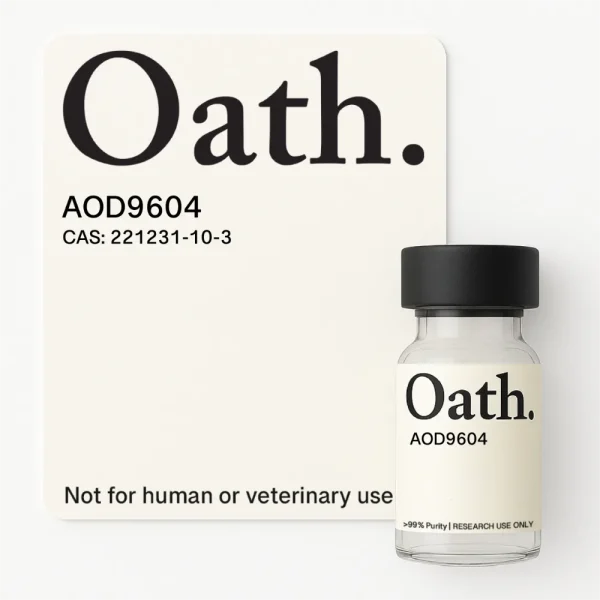
AOD9604
16 residues, note on identity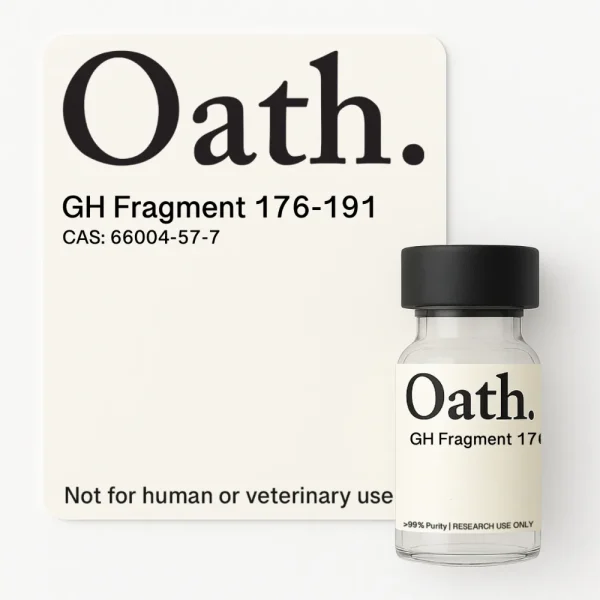
Fragment 176-191
Differs from AOD9604 by one oxygen
Ovagen
Wrong CAS on other sites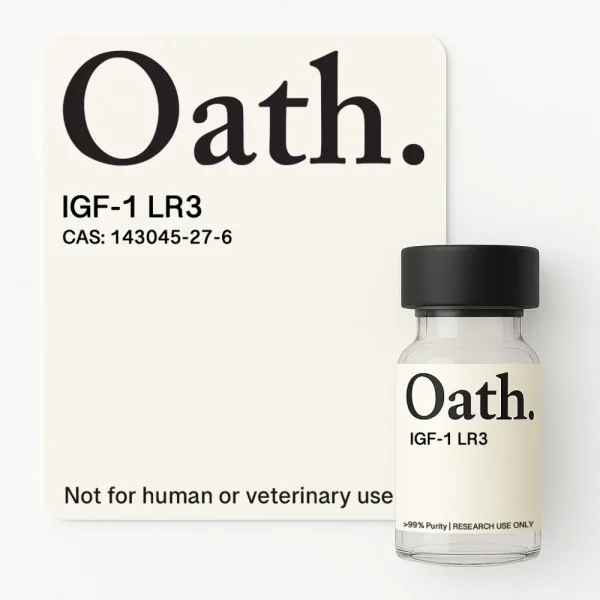
IGF-1 LR3
Folded mass, not unfoldedShop Oath research tested peptides
Every product in the store passed testing at 99% purity or higher.
Oath research FAQ
What does Oath research mean?
It’s how Oath Peptides describes its approach: test every batch, label every vial, and publish product facts you can verify.
What purity do you require?
99% or higher by HPLC, tested by a US lab. Batches below that aren’t listed.
Do you test identity as well as purity?
Purity is tested on every batch. For look-alike compounds such as AOD9604 and Fragment 176-191, identity needs mass spectrometry, and we note that on the product pages.
Keep reading
For more on individual compounds, try the BPC-157 peptide guide or the TB-500 blends comparison. The peptide research blog lists every guide, and the FAQ covers ordering and shipping.
All Oath Peptides products are sold for laboratory research use only. They are not drugs, foods, supplements or cosmetics, and they are not for human or veterinary use.