
The GHK-Cu peptide is one of the smallest and oldest compounds in peptide research. It’s just three amino acids holding a copper ion, and it has been studied since the 1970s. This guide explains its structure, why the powder is blue, what researchers have looked at and how to handle it.
What is the GHK-Cu peptide?
GHK-Cu is the tripeptide glycine-histidine-lysine bound to a copper(II) ion. Its formula is C14H22CuN6O4, its molecular weight is 401.9 g/mol and its CAS number is 89030-95-5. Because it includes a metal ion as part of its structure, it’s called a metallopeptide. That’s rare among research peptides.
Where GHK-Cu came from
Loren Pickart first identified it in 1973 while studying human plasma. He noticed that younger blood samples had more of this small copper-peptide complex than older ones. GHK-Cu occurs naturally in trace amounts in plasma, saliva and urine. The research version is made synthetically.
Why GHK-Cu is blue
The copper is held by nitrogen atoms from the glycine and histidine residues. That copper complex gives the powder its blue to blue-purple color. It’s also why any blend that contains GHK-Cu, such as GLOW or KLOW, has a light blue tint.
What GHK-Cu research covers
GHK-Cu has decades of research behind it in skin, hair and connective tissue models, and it shows up a lot in cosmetic science. Most of the work is in cell and animal models. The vials we sell are for laboratory research only. PubChem has its full record, and PubMed lists the papers.
GHK-Cu on its own or in a blend
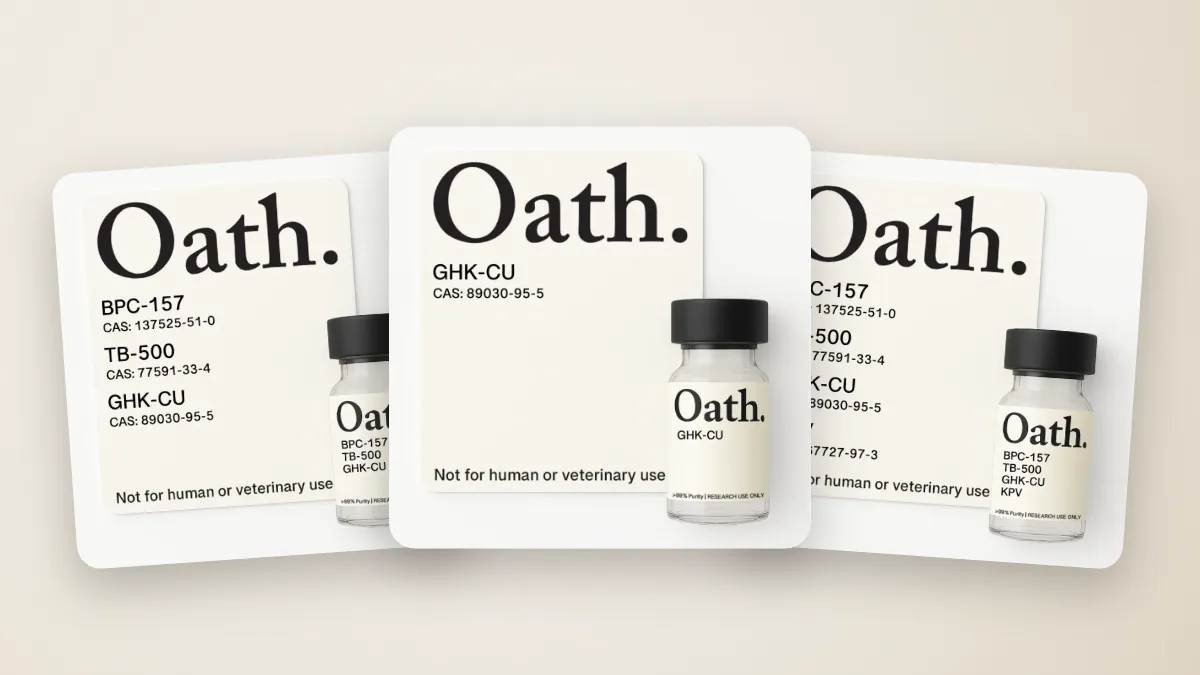
Oath Peptides sells GHK-Cu 50mg and GHK-Cu 100mg. It’s also the main ingredient by weight in two blends. GLOW pairs it with BPC-157 and TB-500 at 35mg of GHK-Cu per 50mg vial. KLOW adds KPV and holds 50mg of GHK-Cu in an 80mg vial.
How to store the GHK-Cu peptide
Refrigerate it at 36 to 46 °F (2 to 8 °C) and keep it away from light. Copper complexes don’t like light, so leave the vial in its box. GHK-Cu is very soluble in water, and most labs reconstitute it with Research Water.
Choosing a GHK-Cu peptide format
If GHK-Cu is the only compound in your study, buy it on its own in the 50mg or 100mg vial. If your work combines it with BPC-157 and TB-500, GLOW gives you all three in one vial at a fixed ratio. KLOW adds KPV on top. Packs of 3, 6 and 12 save 10 to 20 percent.
Whatever you choose, keep the vial in the dark. Copper complexes break down faster in light, and the blue powder is a quick visual check that the copper is still bound.
One more practical note: GHK-Cu is very soluble in water, so it reconstitutes quickly. Swirl gently and the powder should dissolve in under a minute, leaving a clear blue solution.
If you’re comparing copper peptides with other skin research compounds, the skin and tanning peptides category also lists Melanotan 1 and Melanotan 2. They work through melanocortin receptors, which is a completely different route from GHK-Cu.
GHK-Cu peptide products
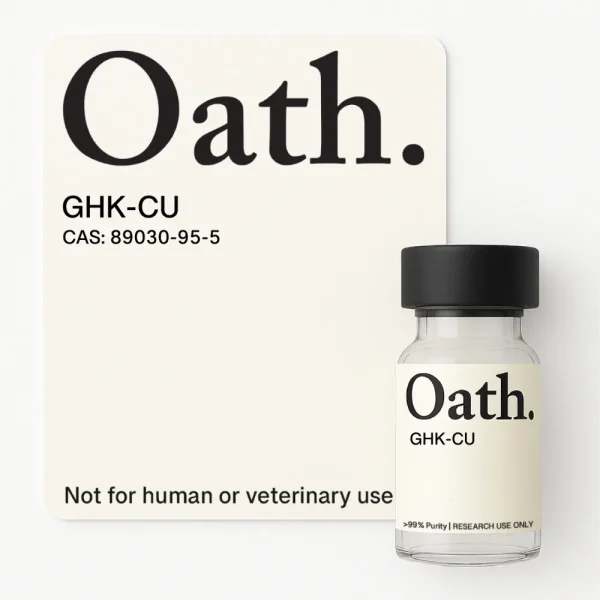
GHK-Cu
50mg and 100mg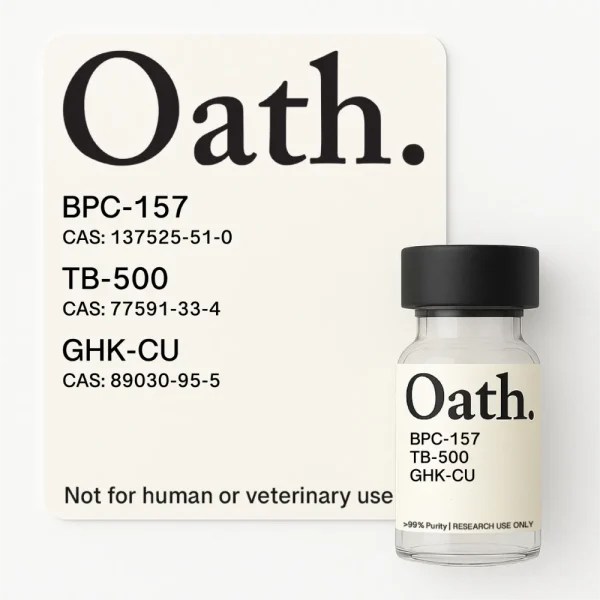
GLOW blend
35mg GHK-Cu per 50mg vial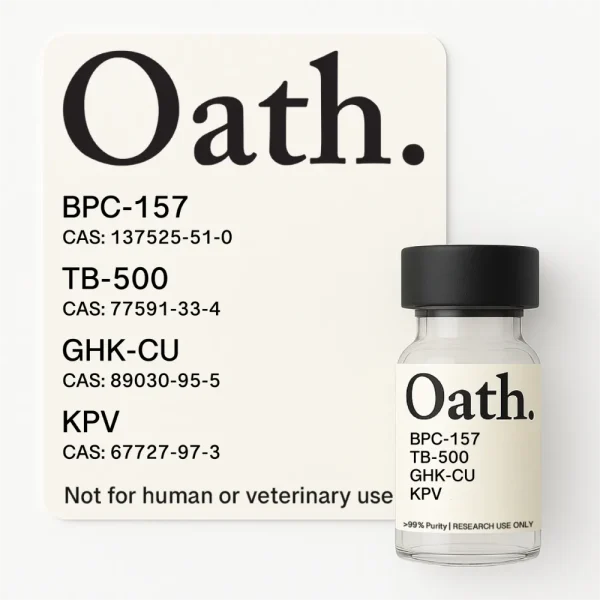
KLOW blend
50mg GHK-Cu per vial
Melanotan 1
MC1R-selective, 10mgBuy GHK-Cu from Oath Peptides
US lab tested at 99%+ purity, in 50mg and 100mg vials, with 2-day shipping.
GHK-Cu peptide FAQ
Why is GHK-Cu blue?
The copper(II) ion bound to the peptide gives the powder its blue color.
Who discovered GHK-Cu?
Loren Pickart identified it in human plasma in 1973.
Which blends contain GHK-Cu?
GLOW (with BPC-157 and TB-500) and KLOW (which also adds KPV).
Related guides
See the TB-500 blends comparison for GLOW and KLOW side by side, or the BPC-157 guide. Browse all skin and copper peptides in the shop.
All Oath Peptides products are sold for laboratory research use only. They are not drugs, foods, supplements or cosmetics, and they are not for human or veterinary use.